Quick Answer
Grip socks performance is not defined by a single feature such as grip dots or material type. Instead, traction and stability emerge from a multi-variable system that includes surface interaction, friction behavior, moisture conditions, fit stability, and usage intensity. Because these variables interact in real time, the same grip socks can perform differently depending on how and where they are used.
What “Grip Socks Performance” Actually Means
Grip socks performance refers to how effectively a sock system can maintain controlled friction and positional stability between the foot and the contact surface. This performance is not limited to preventing slipping. It also includes how consistently traction is maintained during movement, how stable the foot remains under directional changes, and how predictable the contact response is under different conditions.
In practical terms, grip socks function as a layered interaction system:
- Foot-to-sock interaction, which affects internal stability
- Sock structure and material behavior, which influence pressure distribution and deformation
- Sock-to-surface interaction, which determines external traction
Because these layers operate simultaneously, performance cannot be explained by any single component. Instead, it must be understood as the result of multiple interacting variables that change depending on surface conditions, movement type, and environmental factors.
How Grip Socks Generate Traction and Stability
Grip socks begin to perform at the moment contact is formed between the sole of the sock and the surface. Traction is generated through frictional resistance, which depends on both material properties and the quality of contact. However, friction alone does not fully determine stability.
A simplified cause–effect chain can be described as:
- Contact formation → determines effective contact area
- Material interaction → defines friction response
- Force distribution → affects pressure and grip consistency
- Movement dynamics → introduces shear forces and directional changes
- System response → results in stability or slippage
Under static conditions, friction may appear sufficient to prevent slipping. However, during dynamic movement such as pivoting, acceleration, or rapid direction changes, additional variables such as deformation, micro-slippage, and load transfer begin to influence performance.
One of the most influential variables in this system is how the sock interacts with different floor surfaces. Smooth, textured, or coated floors can change how friction behaves and how pressure is distributed. This interaction is explored further in how grip socks performance varies across different floor types .
Key Factors That Affect Grip Socks Performance
Grip socks performance changes when one or more system variables change. These variables do not work independently. A sock may maintain traction under one condition but lose consistency when surface finish, moisture, fit, or usage intensity changes at the same time.
1. Surface Interaction
Surface interaction determines how much usable contact can form between the grip material and the floor. Smooth surfaces, textured surfaces, coated floors, and worn flooring all create different contact behaviors. Even when the grip material remains the same, the actual friction response can change because the surface controls how evenly pressure is distributed.
2. Grip Material and Pattern Design
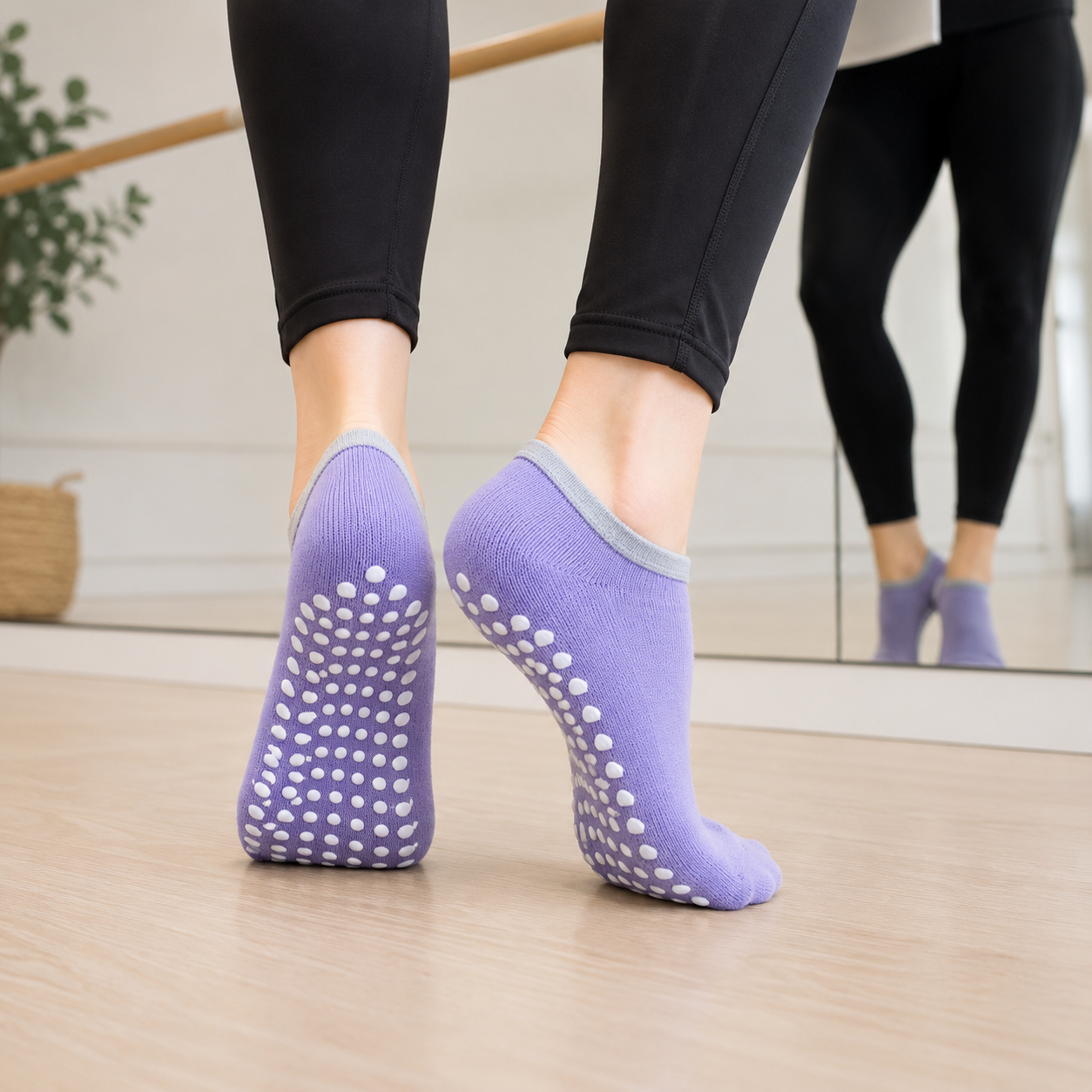
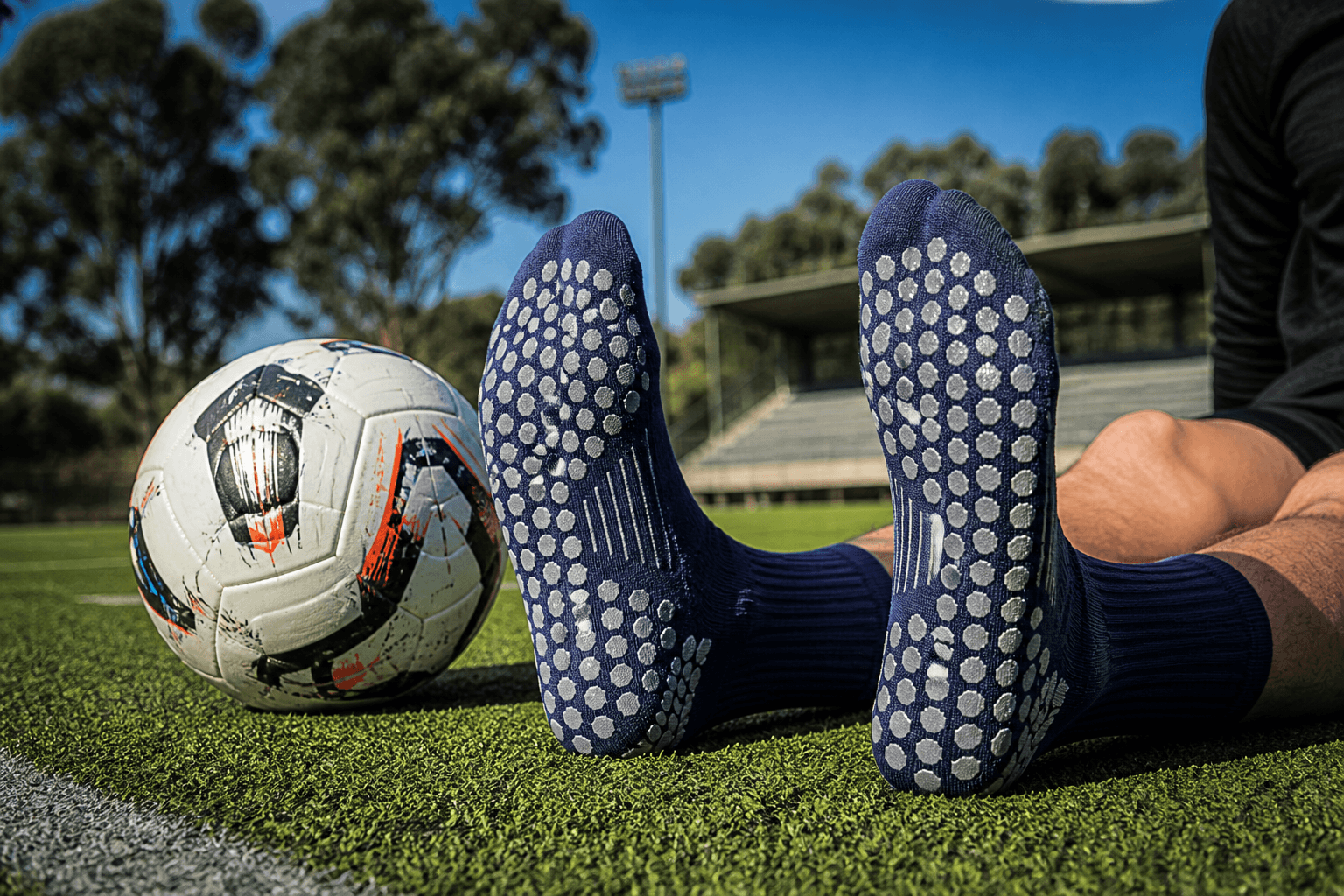
Grip material influences friction behavior, while pattern design affects how that friction is distributed across the sole. Dots, waves, lines, or full-coverage grip layouts can change contact density, flexibility, and pressure response. A larger grip area does not automatically mean stronger performance, because excessive stiffness can reduce natural foot movement and change load transfer.
For a more focused explanation of this variable, see how grip material affects anti-slip performance .
3. Moisture and Humidity
Moisture changes the interaction between the sock, the skin, and the floor surface. Sweat, floor humidity, cleaning residue, or water exposure can reduce friction consistency by creating a thin interface layer. In some cases, moisture affects internal stability before external grip becomes visibly weaker.
4. Fit and Foot Stability
Fit affects how well the sock stays aligned with the foot during movement. If the sock shifts, twists, or bunches, the grip material may no longer stay in the intended contact zone. In this case, the floor grip may still function, but the foot-to-sock layer becomes unstable.
5. Wear and Aging
Grip socks performance can change over time as materials experience repeated compression, washing, stretching, and friction cycles. Aging may affect grip material adhesion, sock elasticity, surface texture, and overall shape recovery. These changes usually occur gradually rather than all at once.
This degradation process is discussed in more detail in what determines grip durability in socks .
6. Movement Intensity and Usage Frequency
Movement intensity determines how much shear force, rotation, and repeated loading the sock must manage. Low-speed controlled movement places different demands on the grip system than jumping, pivoting, fast transitions, or repeated directional changes.
7. Grip Consistency Under Changing Conditions
The most important performance question is often not whether grip exists, but whether it remains consistent when conditions change. A grip sock may perform predictably at the beginning of use but become less consistent as moisture, fatigue, floor contamination, or material wear increases.
Where Grip Socks Performance Has Practical Boundaries
Grip socks can improve traction and stability within a defined interaction system, but they cannot remove all slip risk or guarantee identical performance across every environment. Performance boundaries appear when one or more variables move outside the conditions where the grip system can respond predictably.
Boundary 1: Surface Conditions Can Override Grip Material
When a floor surface is heavily contaminated, excessively smooth, wet, dusty, or chemically coated, the grip material may not form stable contact. In this case, the limiting factor is not only the sock, but the surface interface itself.
Boundary 2: Internal Sock Movement Can Reduce Stability
If the sock moves around the foot, external traction may not translate into user stability. This creates a mismatch: the sole may grip the floor, while the foot still shifts inside the sock.
Boundary 3: Wear Can Reduce Predictability Before Visible Failure
Performance loss can begin before grip dots peel off or fabric breaks down. Reduced elasticity, flattened grip texture, weakened adhesion, and uneven sole pressure can all reduce traction consistency while the sock still appears usable.
Boundary 4: High-Intensity Movement Increases Failure Sensitivity
Faster movement, repeated pivots, jumps, and directional changes increase shear forces. Under these conditions, small weaknesses in fit, moisture control, or material aging become more noticeable.
Surface-specific limits are especially important in commercial indoor environments. For example, whether grip socks work on tile floors in commercial indoor facilities depends on the interaction between floor finish, moisture, movement type, and sock construction.
Common Questions That Require Further Explanation
Because grip socks performance is influenced by multiple interacting variables, many practical questions cannot be fully answered within a single overview. Instead, they represent specific conditions within the broader system described above.
- Do grip socks work on tile floors in commercial indoor facilities?
- What determines grip durability in socks?
- Why do grip socks sometimes feel slippery even when the grip pattern is intact?
- How does moisture or sweat affect traction and stability?
- How long does grip performance remain consistent under repeated use?
- What role does fit play in stability during dynamic movement?
- Why can two similar grip socks perform differently in practice?
- How does movement intensity change traction behavior?
Each of these questions reflects a more specific scenario or condition within the performance system. They are best explored individually rather than condensed into a single explanation, allowing each variable to be analyzed under controlled assumptions.
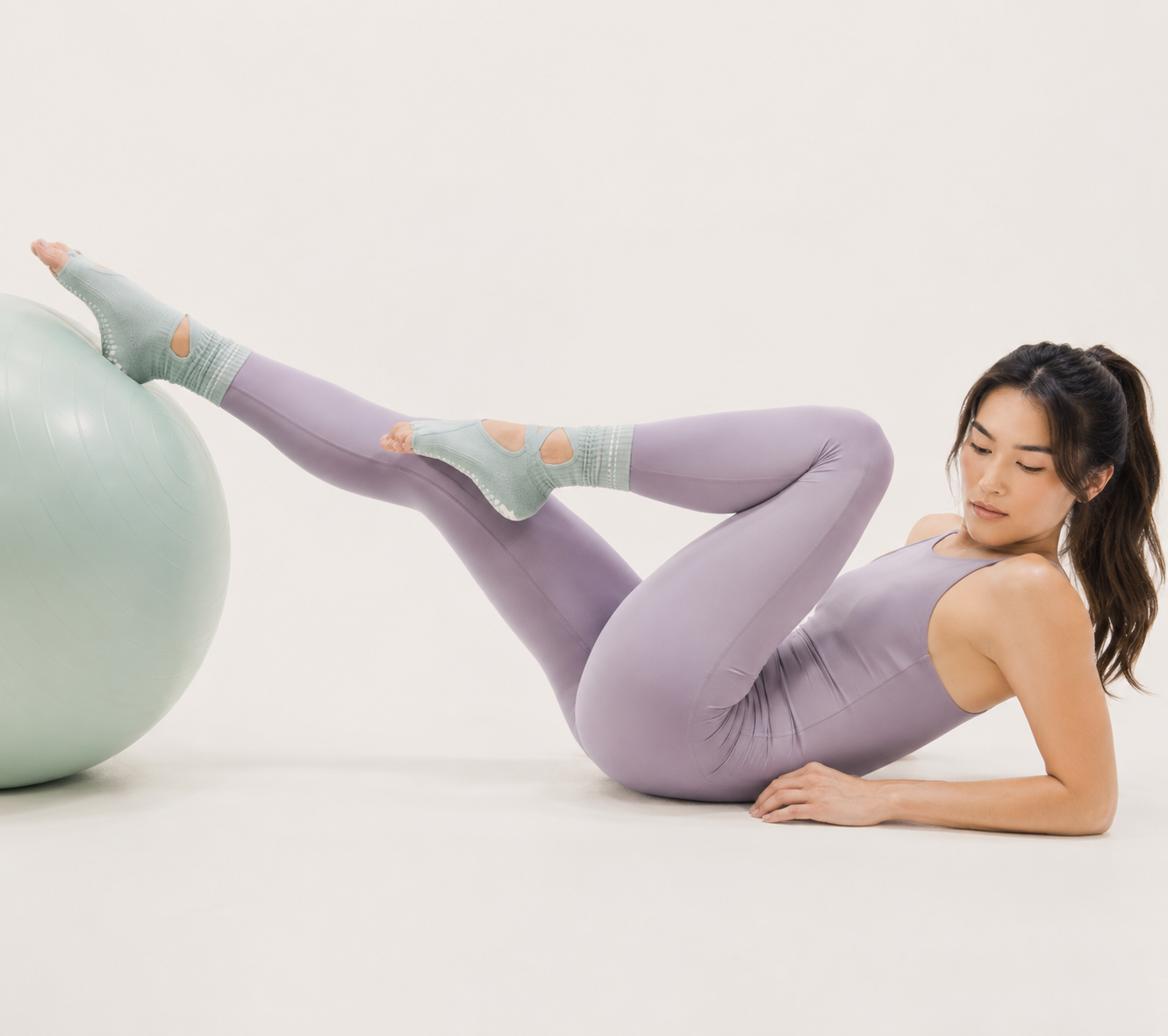
In real-world applications, grip socks are widely used in environments such as fitness studios, training centers, and indoor activity facilities. For example, product configurations designed for these environments can be explored in yoga and pilates grip socks collections and trampoline park grip socks collections, where surface interaction and movement patterns differ significantly.
From a production perspective, performance differences are also influenced by material selection, construction methods, and grip application processes. These factors are commonly discussed in grip socks manufacturing, where design and production variables shape how the final product behaves under different conditions.
Conclusion
Grip socks performance should be understood as a dynamic system rather than a fixed product feature. Traction and stability emerge from the interaction between surface conditions, material behavior, moisture levels, fit stability, and movement intensity. Because these variables change across environments and over time, performance outcomes are inherently variable.
Viewing grip socks through this system-based framework makes it possible to interpret why performance differs under different conditions without reducing the explanation to a single factor. It also highlights the need for more focused analysis when evaluating specific use cases, surfaces, or performance expectations.
This page provides the mechanism-level foundation for understanding grip socks performance. More specific questions—such as surface-specific behavior, durability over time, or stability under dynamic movement— require dedicated analysis at the individual factor level.