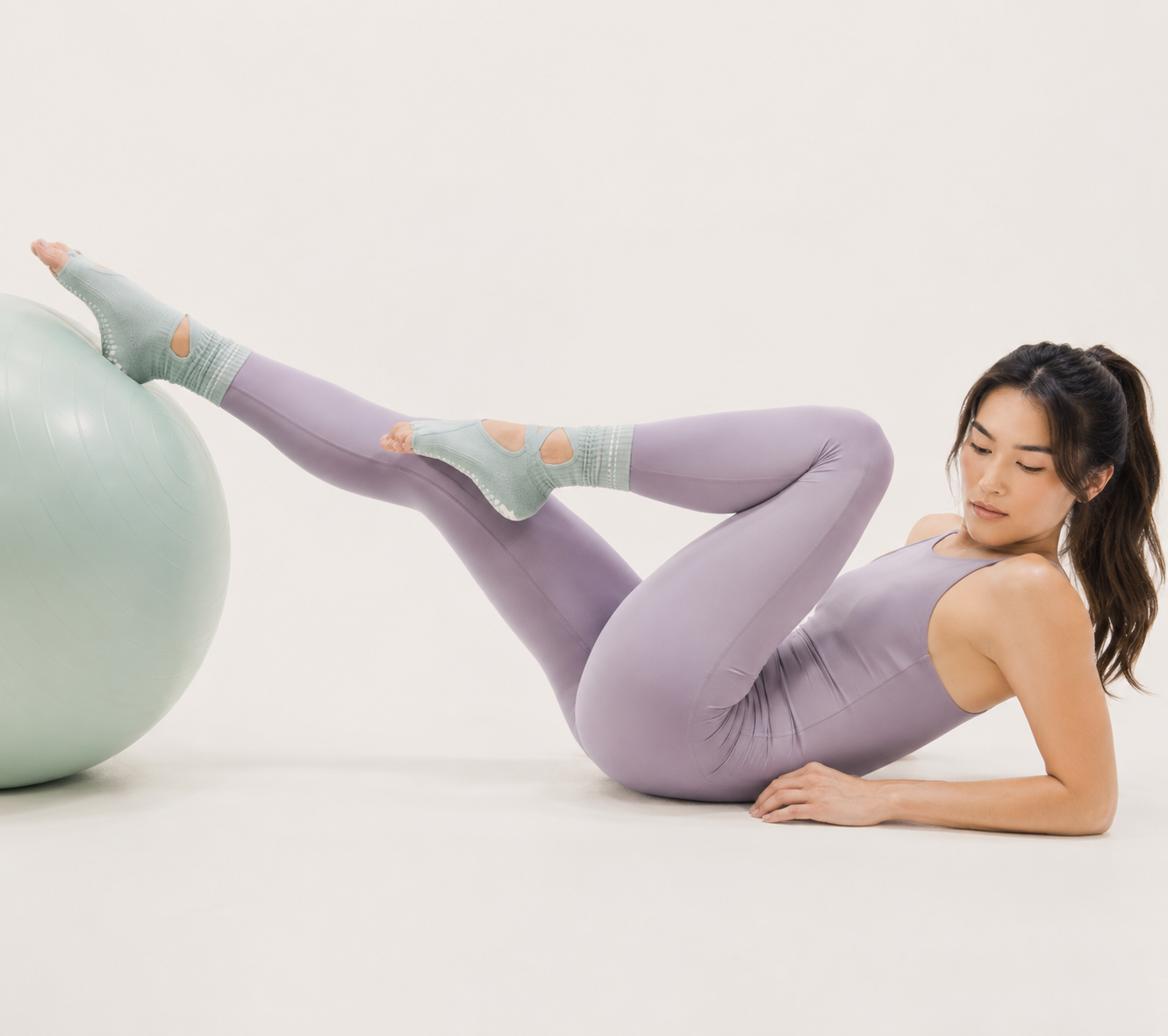
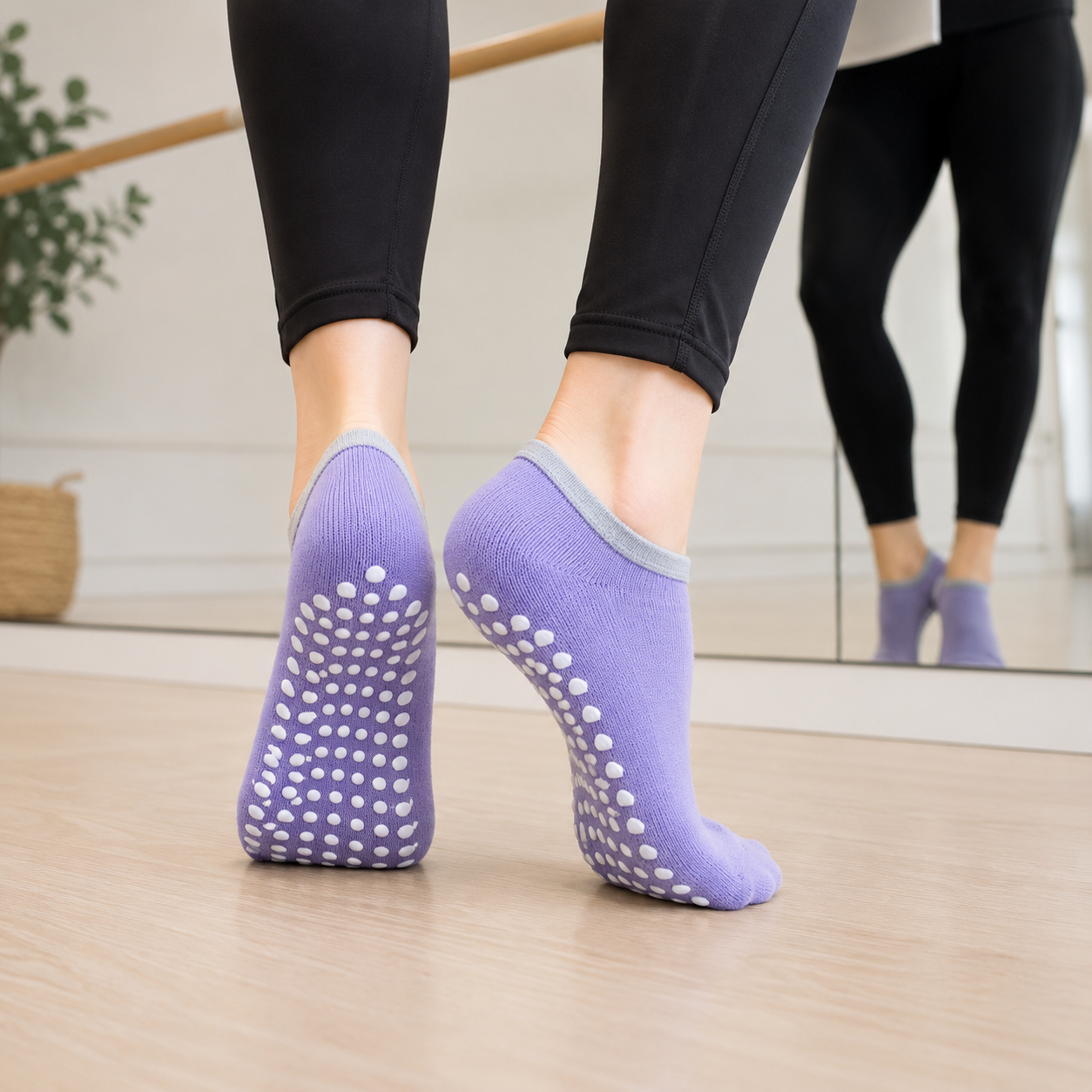
A grip socks factory in China provides OEM, ODM, and private label manufacturing for anti-slip socks used in studios, hospitals, trampoline parks, and commercial applications. Compared with trading suppliers, a factory offers better control over production, customization, quality consistency, and large-scale supply.
Contents
 Why Choose a Grip Socks Factory in China?
 Why Choose a Grip Socks Factory in China?
China has become one of the leading global manufacturing hubs for grip socks due to its integrated textile supply chain, skilled labor, and scalable production capacity. Working directly with a grip socks factory China supplier allows buyers to control product specifications, optimize cost structures, and ensure long-term supply stability.
Compared to general wholesalers, factories provide better support in product development, customization, and consistent quality management. This is especially important for buyers sourcing for commercial use, branded retail, or institutional applications.
As part of a broader grip socks manufacturer sourcing strategy, choosing a China-based factory is often driven by the balance between cost efficiency and production flexibility.
- Direct factory pricing with better cost control
- Strong customization capability for OEM and private label projects
- Stable production for bulk and repeat orders
- Export-oriented workflow with international experience
Manufacturing Capabilities
A reliable socks factory in China should offer more than just production. It should provide a structured manufacturing system that supports different product types, application scenarios, and order volumes.
1. Scalable Production Capacity
- Support for large volume commercial orders
- Flexible MOQ for small and medium buyers
- Ability to handle multiple SKUs and size ranges
2. Advanced Knitting and Grip Technology
- High-efficiency knitting machines for consistent output
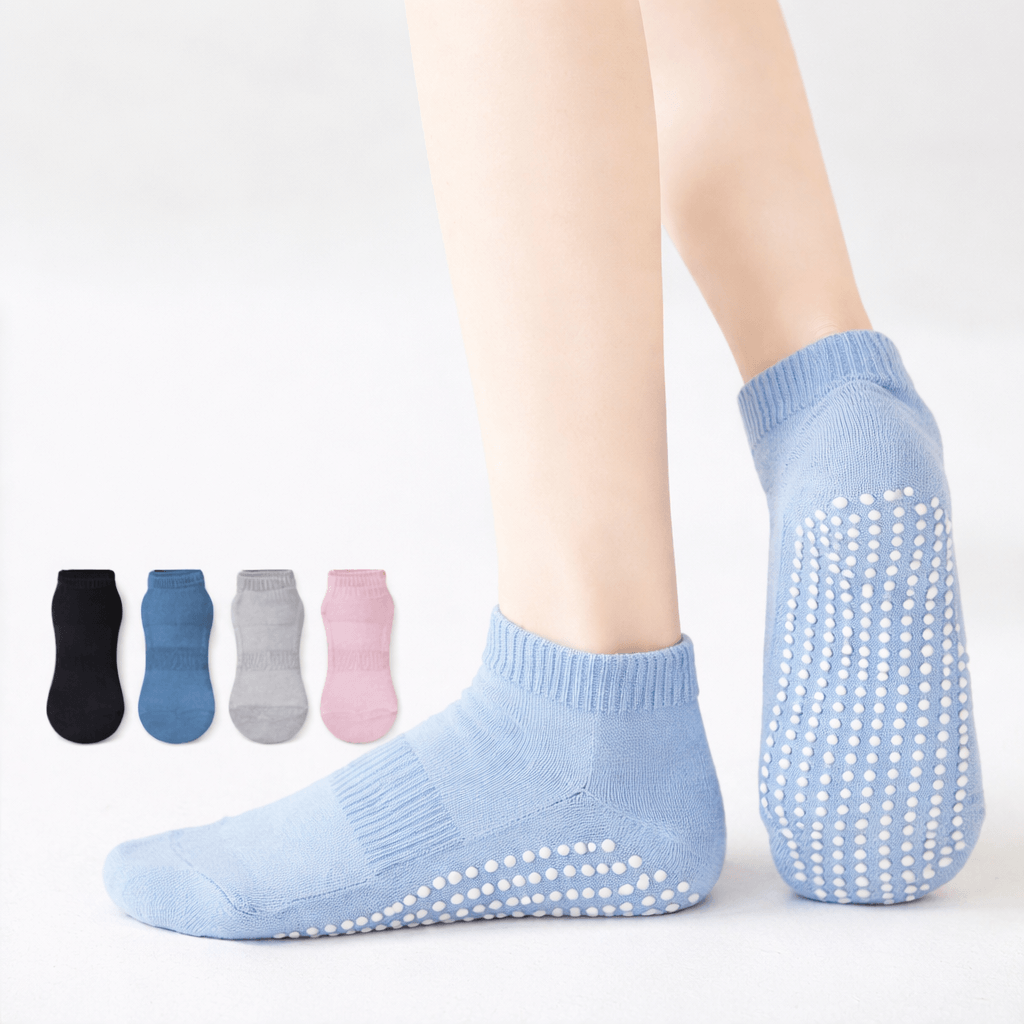
- Silicone grip application for anti-slip performance
- Custom grip layouts for different floor types and uses
3. Multi-Application Product Development
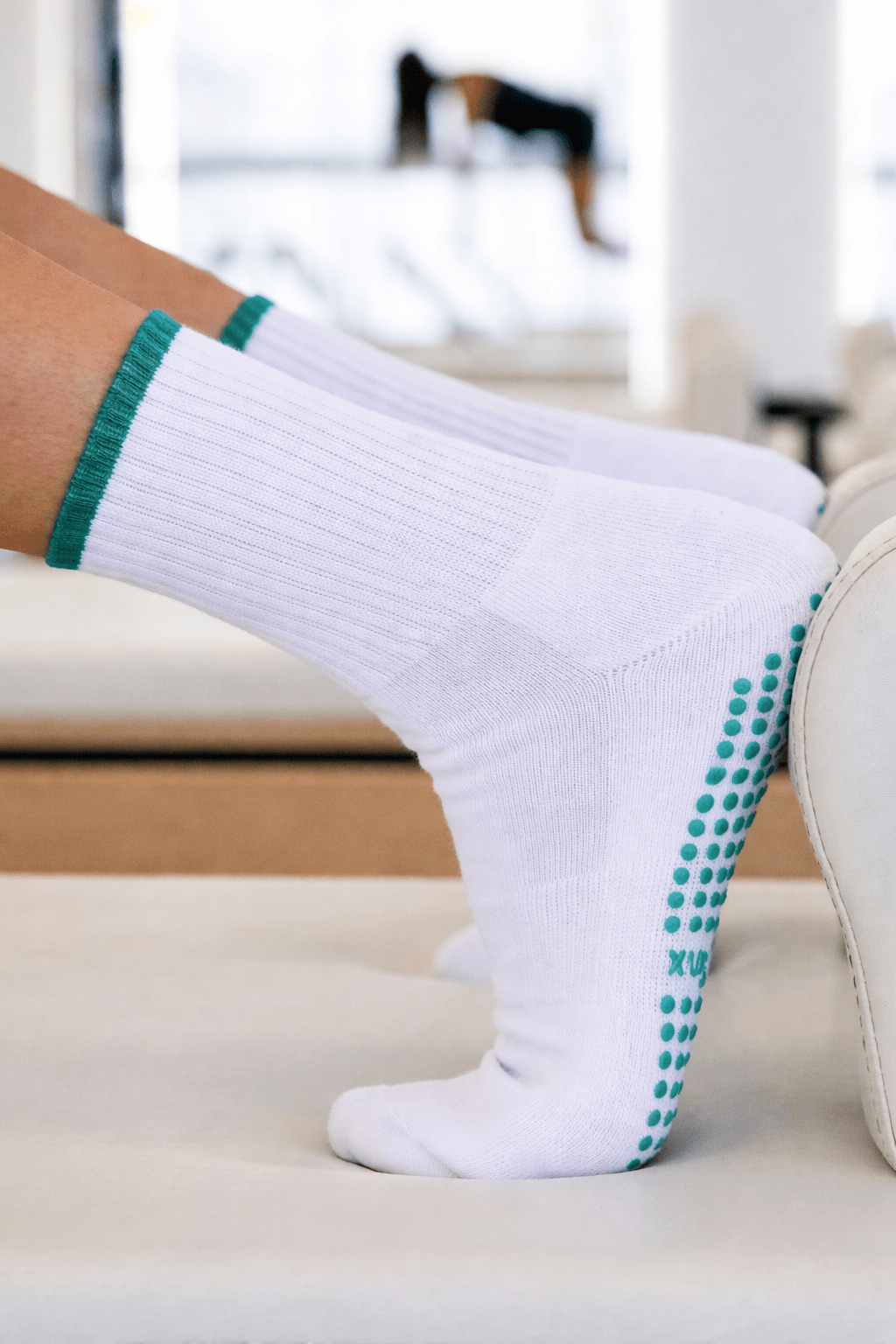
- Studio grip socks for Pilates, yoga, and barre
- Medical non slip socks for hospitals and care centers
- Commercial socks for trampoline parks and entertainment venues
For example, products such as non slip socks manufacturer solutions require different grip structures and comfort levels depending on the end-use environment.
Customization Options (OEM/ODM)
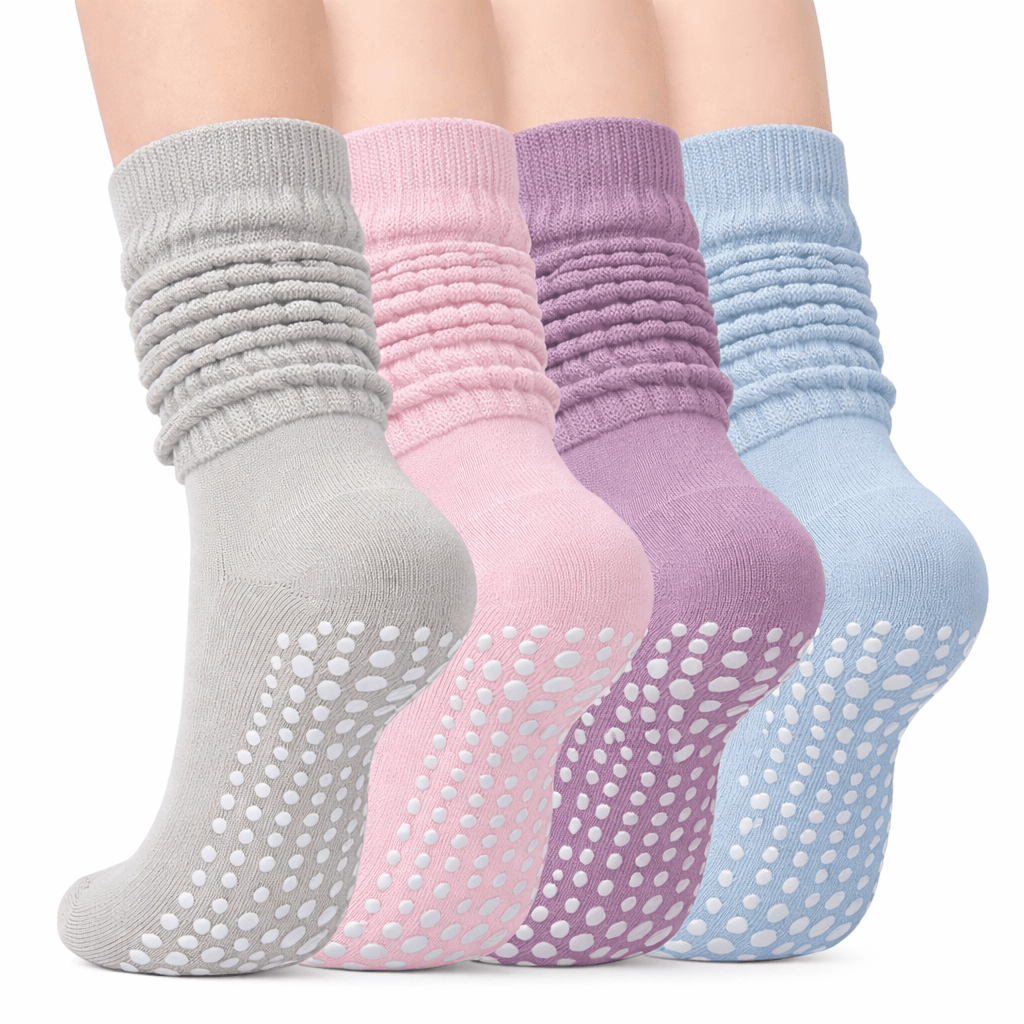
One of the main advantages of working with a grip socks factory in China is the ability to support full OEM and ODM customization. This is essential for brands, distributors, and commercial buyers who need differentiated products rather than standard stock items.
1. Logo and Branding Customization
Factories can integrate branding directly into the socks or packaging, depending on positioning and target market.
- Jacquard logos knitted into the sock structure
- Heat transfer or silicone logo printing
- Minimal branding for institutional or hospital use
- Custom labels, tags, and retail packaging
2. Grip Pattern Design
Grip design is one of the most important elements of anti-slip socks. A professional factory can adjust grip patterns based on functionality, durability, and visual differentiation.
- Standard dot grip for general use
- Custom patterns for branding and stronger traction
- Full-sole or zoned grip coverage
- Enhanced durability for repeated washing
3. Material and Structure Options
Different applications require different material compositions and sock structures. Factories in China can provide a wide range of options to match specific use scenarios.
- Cotton, polyester blends, or performance yarns
- Breathable, moisture-wicking constructions
- Ankle, crew, and mid-calf sock types
- Elastic support and compression options
4. Packaging and Export Solutions
Packaging customization is often required for retail distribution, brand positioning, and export logistics.
- Retail-ready packaging with header cards
- Custom printed boxes or OPP bags
- Barcode labeling and SKU identification
- Bulk packing for commercial and institutional supply
For buyers focused on brand development, related pages such as custom grip socks with logo and private label grip socks provide more detailed guidance on customization strategies.
Production Process
A structured production process ensures consistency, efficiency, and reliable delivery timelines. A typical grip socks factory China workflow includes the following steps:
Step 1: Requirement Confirmation
The factory confirms product specifications, including size range, materials, grip design, logo placement, packaging requirements, and order quantity.
Step 2: Sample Development
Samples are produced for review of fit, appearance, grip performance, and branding details. This step helps align expectations before bulk production.
Step 3: Knitting Production
Socks are knitted using industrial machines based on the approved design. Machine settings are calibrated to ensure consistency in size, elasticity, and structure.
Step 4: Grip Application
Anti-slip silicone or similar materials are applied to the sole. Proper curing ensures durability and stable adhesion.
Step 5: Finishing and Packaging
Products are shaped, trimmed, inspected, and packed according to customer requirements and export standards.
This workflow is critical when selecting a grip socks wholesale partner that can transition smoothly from sampling to mass production.
Quality Control System
Quality control is essential for maintaining consistent product performance, especially for anti-slip socks used in safety-related environments such as hospitals and studios.
Raw Material Inspection
- Verification of yarn composition and quality
- Color consistency and batch control
- Material suitability for intended use
In-Process Inspection
- Monitoring knitting density and size accuracy
- Checking logo placement and visual consistency
- Ensuring correct grip positioning and coverage
Final Product Inspection
- Appearance and finishing quality checks
- Stretch and durability testing
- Grip adhesion and washing resistance
- Packaging and labeling verification
A well-managed quality system reduces defects such as inconsistent sizing, grip peeling, or packaging errors, which are critical factors for long-term B2B cooperation.
Certifications and Compliance Support
For international buyers, compliance and documentation are important considerations when choosing a grip socks factory in China.
- Support for export documentation and customs requirements
- Material declarations and product information for buyers
- Production consistency suitable for repeated orders
- Ability to align with customer-specific compliance needs
Beyond certificates, reliable communication and stable production records are key indicators of a trustworthy manufacturing partner.
Factory Location and Supply Chain Advantages
China’s textile and manufacturing ecosystem provides a strong foundation for grip socks production. A grip socks factory China partner benefits from an integrated supply chain that includes yarn suppliers, knitting facilities, printing technology, and packaging support within a coordinated industrial network.
This integrated system allows factories to offer faster response times, better cost control, and more flexible production scheduling compared to fragmented sourcing models.
- Efficient coordination between material sourcing and production
- Reduced lead time from sampling to bulk production
- Competitive pricing due to scale and supply chain integration
- Reliable export processes with global shipping experience
For buyers evaluating sourcing strategies, this model often provides a balance between cost efficiency and long-term supply stability, especially when compared with trading-only suppliers.
Typical Clients and Use Scenarios
A grip socks factory in China serves a wide range of international clients, each with different requirements based on their business model and end-use scenarios.
Studios and Fitness Programs
Pilates, yoga, and barre studios typically require socks that combine functional grip performance with clean visual design and brand consistency.
Hospitals and Care Institutions
Medical buyers prioritize safety, comfort, ease of use, and reliable anti-slip functionality for patients and elderly users.
Trampoline Parks and Commercial Venues
These clients require durable socks with strong grip adhesion and high resistance to repeated washing and heavy usage.
Brands, Importers, and Distributors
Commercial buyers often focus on private label capability, packaging customization, stable supply, and scalability for long-term product lines.
For application-specific sourcing, buyers may also review pages such as Pilates grip socks manufacturer to better understand targeted product development approaches.
Frequently Asked Questions
Why choose a grip socks factory in China instead of a trading company?
A factory provides direct control over production, customization, and quality consistency, while trading companies usually rely on third-party suppliers and offer less flexibility.
Can a China grip socks factory support private label projects?
Yes. Most factories support OEM and private label production, including logo integration, packaging customization, and product development.
What is the typical MOQ when working with a factory in China?
The MOQ depends on design complexity, customization requirements, and production setup. Simpler designs usually have lower MOQ compared to fully customized products.
How long does production usually take?
Lead times vary depending on order size and complexity. Sample development is typically faster, while bulk production requires more time for manufacturing and quality control.
Can the factory handle export and international shipping?
Yes. Export-oriented factories in China usually have experience handling international logistics, packaging standards, and documentation required for global shipments.
Conclusion
Working with a reliable grip socks factory in China allows buyers to access scalable production, flexible customization, and consistent product quality. For studios, hospitals, trampoline parks, brands, and distributors, choosing a manufacturing partner rather than a reseller helps ensure better control over product performance and long-term supply.
Whether you are developing a private label collection, sourcing for commercial use, or building a distribution program, a structured factory partner can support your project from sampling to bulk production with greater efficiency and reliability.