Non Slip Socks Manufacturer
A professional non slip socks manufacturer provides OEM, ODM, and private label production for anti slip socks used in hospitals, studios, trampoline parks, and commercial environments. Instead of generic wholesale supply, a factory-based partner ensures consistent grip performance, scalable production, logo customization, and compliance with international quality standards.
Contents
What Does a Non Slip Socks Manufacturer Do?
A non slip socks manufacturer specializes in producing socks with anti-slip grip technology designed for safety, performance, and commercial use. Unlike standard socks suppliers, manufacturers control the entire production process—from yarn selection and knitting to grip application and packaging—ensuring stable quality and scalable output.
These products are widely used in healthcare environments, rehabilitation centers, fitness studios, trampoline parks, and hospitality sectors, where floor safety and user stability are critical.
As a grip socks manufacturer, the focus is not only on production volume, but also on engineering grip performance based on different floor conditions such as wood, tile, or vinyl surfaces.
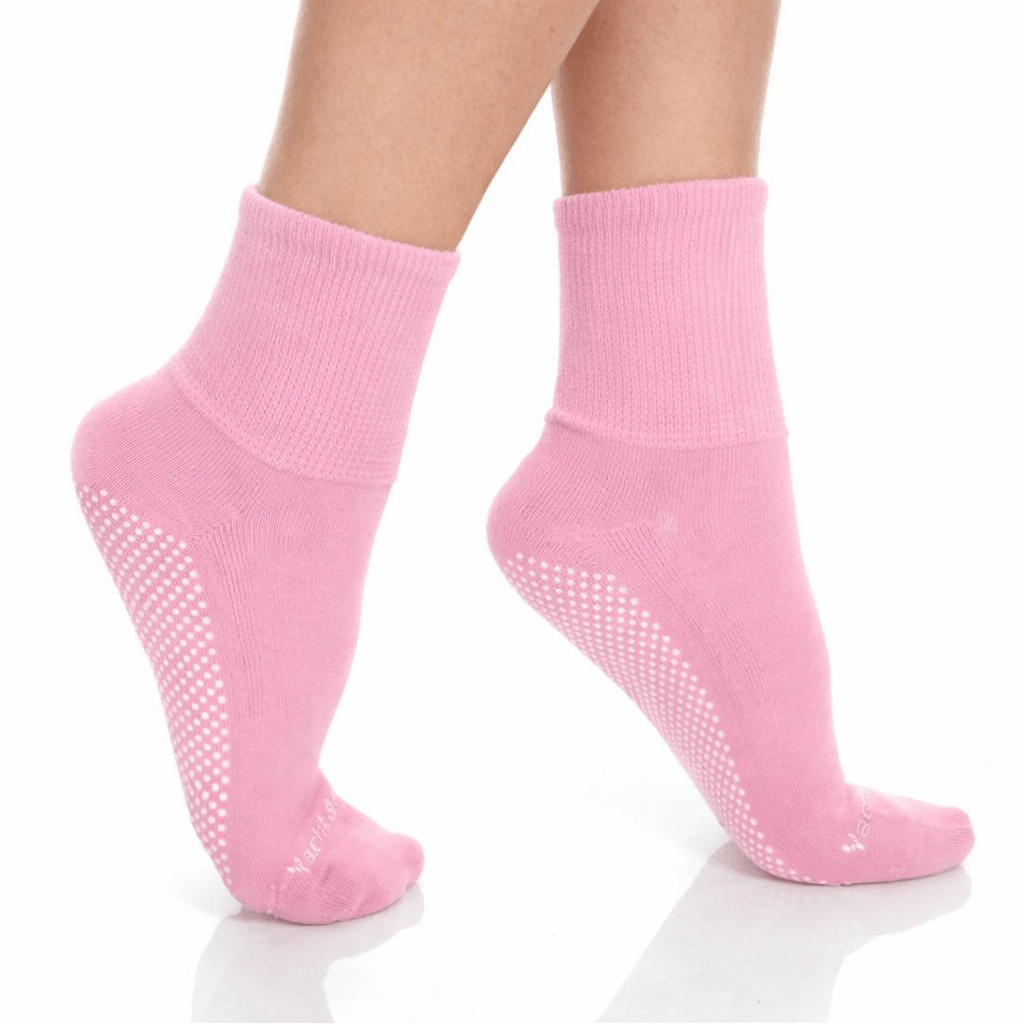
- Hospital non slip socks for patient safety
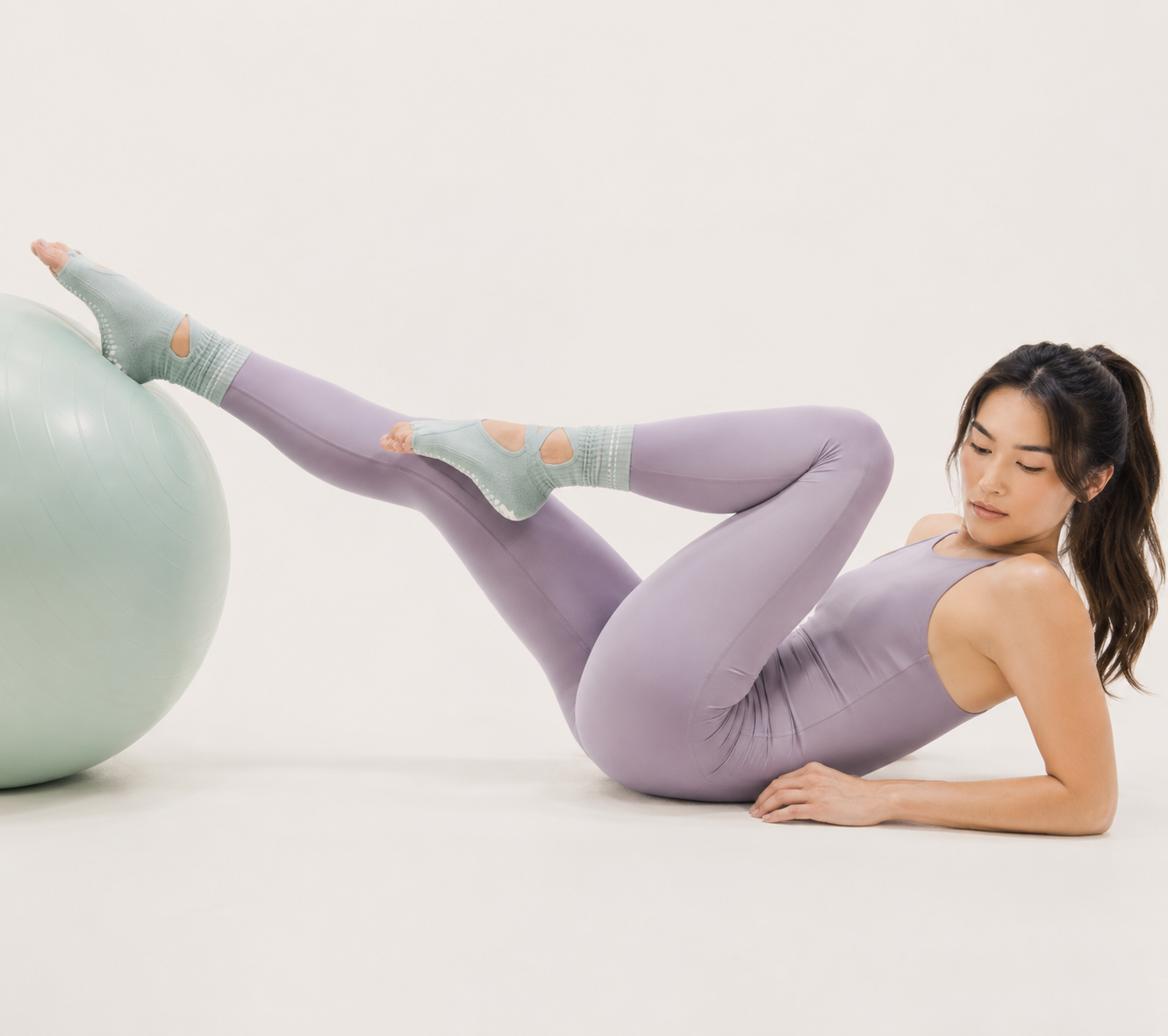
- Studio grip socks for Pilates, yoga, and barre
- Trampoline park socks for commercial operations
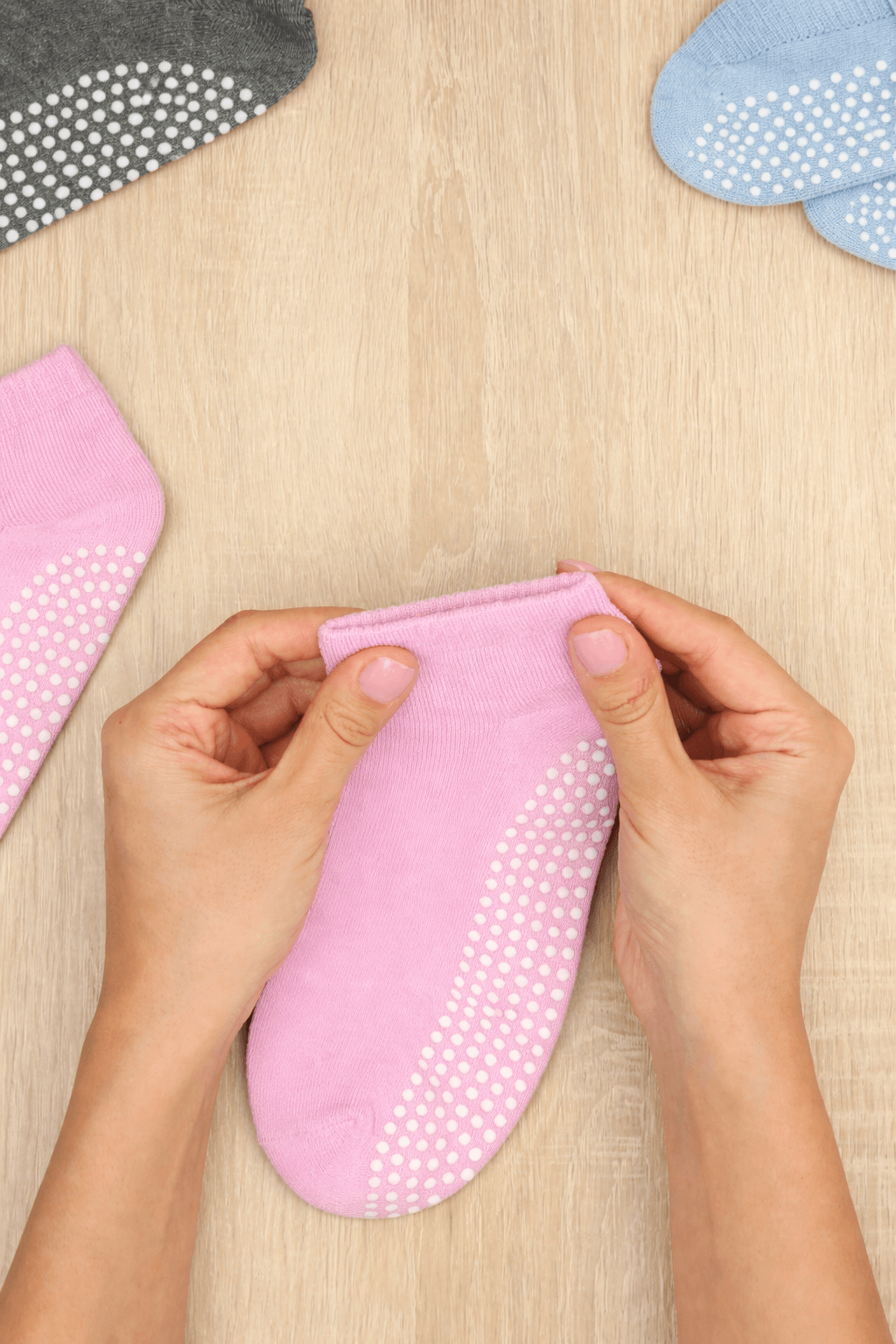
- Retail-ready branded anti slip socks collections
Manufacturing Capabilities
A reliable anti slip socks manufacturer must offer stable production capacity and technical flexibility to support bulk orders and customized projects.
1. High-Volume Production Capacity
- Daily output supports large-scale commercial orders
- Flexible MOQ for small brands and large distributors
- Stable supply chain for long-term cooperation
2. Advanced Grip Application Technology
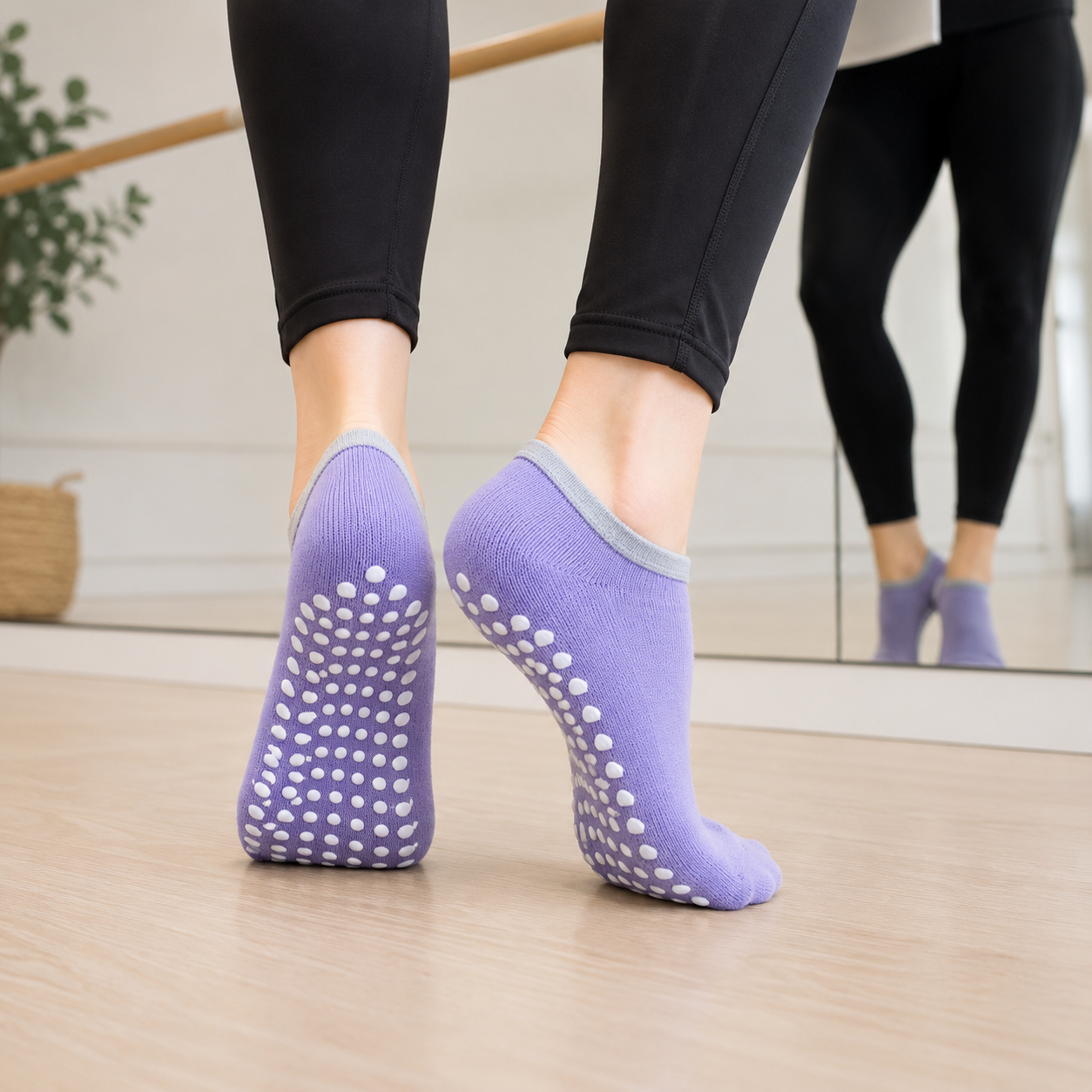
- Silicone grip printing (dots, patterns, full coverage)
- Durable anti-slip materials resistant to washing
- Custom grip layouts for different applications
3. Multi-Application Product Development
- Medical-grade socks for hospitals and elderly care
- Performance socks for fitness and studio use
- Commercial socks for trampoline parks and entertainment venues
For example, specialized solutions such as trampoline park grip socks require stronger grip durability and repeated wash resistance compared to standard retail socks.

Customization Options (OEM/ODM)
A qualified non slip socks manufacturer should support more than basic logo printing. For B2B buyers, customization usually involves product structure, grip layout, sizing strategy, packaging format, and brand presentation. This is especially important for distributors, studios, hospitals, and sourcing teams that need socks aligned with their own market positioning.
1. Logo Customization
Private label projects often require brand identity to be integrated directly into the socks. Depending on the design and production method, logos can be added through jacquard knitting, embroidery, heat transfer, or packaging-based branding.
- Jacquard logo on the cuff or upper sock body
- Minimal branding for clinical or institutional use
- Retail-oriented branded presentation for private label programs
2. Grip Pattern Customization
Grip design affects both function and visual differentiation. Manufacturers can adjust the grip shape, density, distribution, and coverage area based on the intended application. A hospital non slip socks factory may prioritize steady traction and easy size identification, while a studio or fitness program may need a cleaner visual style and more flexible foot movement.
- Dot grips for general anti-slip performance
- Pattern grips for stronger brand distinction
- Full-sole or zoned grip layouts for different floor contact needs
3. Material, Size, and Structure Options
Different end uses require different sock constructions. Medical and care environments may prioritize softness, breathability, and easy wearing, while commercial sports uses may require tighter fit, stronger elasticity, and better shape retention after repeated washing.
- Cotton-rich, polyester-blend, or performance yarn options
- Adult, kids, and custom size range development
- Ankle, crew, invisible, or mid-calf sock structures
4. Packaging Customization
Packaging is often part of the OEM decision, especially for importers, distributors, and retail brands. A factory with export experience should support multiple packaging styles depending on whether the order is for resale, studio membership kits, hospital programs, or promotional campaigns.
- Single pair retail cards or header cards
- OPP bags, barcode labels, and size stickers
- Bulk carton packing for commercial institutions
- Custom packaging for branded wholesale supply
For buyers comparing supplier options, pages such as custom grip socks with logo and private label grip socks are closely related because they address brand-oriented customization decisions beyond basic manufacturing.
Production Process
A professional anti slip socks manufacturer usually follows a structured workflow that reduces sampling errors, improves consistency, and supports repeat orders. This matters for buyers who need reliable lead times and predictable quality across multiple production runs.
Step 1: Requirement Confirmation
The project begins with confirming product type, application scenario, size range, grip style, material preference, logo method, packaging needs, and target order quantity. Clear confirmation at this stage helps avoid revisions later in the process.
Step 2: Sampling and Development
After specifications are confirmed, the manufacturer prepares samples for fit, appearance, grip performance, and branding review. Sample development is especially important for hospital non slip socks factory projects and customized studio programs where compliance, safety, or visual consistency may be required.
Step 3: Yarn Preparation and Knitting
Once the sample is approved, the factory arranges yarn preparation and sock knitting according to the approved structure and size breakdown. Machine settings are adjusted to maintain shape consistency, elasticity, and production efficiency.
Step 4: Grip Printing Application
The non-slip grip is then applied to the sock sole using controlled silicone or similar anti-slip materials. Grip placement accuracy, adhesion stability, and curing quality directly affect final performance.
Step 5: Finishing, Inspection, and Packing
After shaping, trimming, and finishing, the socks go through inspection before packaging. Final packing may include branded labels, size stickers, export cartons, and retailer-specific markings.
This production logic is also relevant for buyers evaluating grip socks factory China options, because delivery stability often depends on factory workflow discipline rather than price alone.
Quality Control System
Quality control is one of the biggest differences between a factory-based non slip socks manufacturer and a general trading supplier. For B2B buyers, stable quality is essential because anti-slip socks are often connected to user safety, repeat purchases, and brand reputation.
Raw Material Inspection
- Check yarn composition, consistency, and softness
- Verify color matching and batch stability
- Confirm suitability for the target application
In-Process Production Inspection
- Monitor knitting density and size tolerance
- Check logo position and visual accuracy
- Inspect grip placement and printing consistency
Finished Product Inspection
- Appearance and workmanship inspection
- Stretch and fit consistency checks
- Grip adhesion and washing durability review
- Packing accuracy and export carton verification
For commercial buyers, this quality process helps reduce complaints related to sizing inconsistency, grip peeling, weak elasticity, and packaging errors. It also supports smoother long-term supply for branded collections and institutional use.
Certifications and Compliance Support
Depending on the target market, a non slip socks manufacturer may also need to support testing documents, material declarations, and compliance-related communication. This is especially relevant for hospital sourcing, international retail programs, and importer procurement processes.
- Support for export-oriented documentation
- Material and packaging information for buyer review
- Production consistency suitable for repeat purchase programs
- Cooperation with customer-specific compliance requirements when needed
For many buyers, compliance readiness is not just about certificates. It is also about whether the supplier can communicate clearly, provide stable production records, and support customized supply projects over time.
Factory Location and Supply Chain Advantages
Working with a China-based non slip socks manufacturer can offer meaningful advantages in cost control, production coordination, and export support. For commercial buyers, the value is not simply lower pricing. It is the combination of manufacturing flexibility, customization efficiency, and the ability to scale from samples to repeat bulk orders.
A factory-oriented supply chain can usually support:
- Faster communication between development and production teams
- Better control over knitting, grip printing, and packing processes
- More efficient sample-to-order conversion
- Stable sourcing for long-term wholesale and OEM programs
This is particularly important for buyers who need multiple SKUs, mixed sizes, branded packaging, or recurring replenishment schedules. In these cases, a manufacturing partner with organized workflow and export experience is usually more reliable than a general reseller.
Buyers also often compare this page with broader sourcing pages such as grip socks wholesale when evaluating whether they need an inventory supplier or a true manufacturing partner.
Typical Clients and Use Scenarios
A non slip socks manufacturer may serve a wide range of commercial buyers, but the product requirements often differ significantly depending on the final application. Understanding these differences helps buyers select the right product structure and customization plan.
Hospitals and Care Institutions
These buyers typically focus on safety, comfort, easy wearing, simple sizing, and dependable anti-slip function. In some cases, color coding or size identification may also be useful for internal distribution.
Pilates, Yoga, and Barre Studios
Studio buyers often need socks that balance grip performance, aesthetic presentation, and brand consistency. The design usually needs to align with class atmosphere and client expectations while still maintaining functional traction on smooth indoor floors.
Trampoline Parks and Entertainment Venues
Commercial venues usually prioritize durability, repeated wash resistance, strong grip adhesion, and scalable bulk supply. These projects may also require fast replenishment and clear size range planning.
Brands, Importers, and Distributors
Brand owners and distributors often need private label support, flexible packaging, repeat order stability, and clear production communication. Their concern is not only the sock itself, but whether the manufacturer can support brand growth over time.
Because different end users require different development logic, buyers may also review pages like Pilates grip socks manufacturer to compare application-specific sourcing priorities.
Frequently Asked Questions
What is the difference between a non slip socks manufacturer and a wholesaler?
A manufacturer is directly involved in product development and production, including knitting, grip application, customization, and packaging. A wholesaler may only resell existing stock styles with limited control over materials, sizing, or branding.
Can a non slip socks manufacturer provide private label service?
Yes. Many manufacturers support OEM and private label projects, including custom logos, grip patterns, size assortments, labels, header cards, and retail packaging.
Can you develop hospital non slip socks factory projects?
Yes. Hospital-oriented projects can usually be developed based on size requirements, comfort targets, grip function, and packaging or identification needs. The exact structure depends on the market and application scenario.
What is the usual MOQ for customized anti slip socks?
The MOQ varies depending on design complexity, logo method, material selection, and packaging requirements. Simple styles usually have lower MOQ than highly customized programs.
How long does sample development and bulk production take?
Lead time depends on order quantity, design complexity, material availability, and packaging specifications. Sample development is generally much shorter than bulk production, and confirmed specifications help reduce delays.
Conclusion
Choosing the right non slip socks manufacturer is not only about finding a supplier that can make socks. It is about selecting a production partner that can support grip performance, customization, quality consistency, and long-term commercial supply. For hospitals, studios, trampoline parks, brands, and distributors, reliable manufacturing capability directly affects user experience, brand reputation, and reorder efficiency.
If your project requires OEM, ODM, or private label support for anti-slip socks, it is important to work with a manufacturer that understands both production details and application-specific needs. From hospital non slip socks factory development to commercial branded programs, a structured manufacturing partner can help turn product concepts into stable supply.